If anything in recent memory has challenged Oakland's reputation for violence and crime it's food. Nowadays, when the New York Times or the Guardian or GQ or other far-flung publications risk encouraging their readers to visit here, they might mention Lake Merritt or the Oakland Museum of California or the weather, but it's restaurants they emphasize. What started promisingly in 2003, with Tamarindo and then the Trappist in Old Oakland, with Luka's and Flora in Uptown and Dona Tomas in Temescal, has spread with great fervor and many wood-burning ovens to Piedmont Avenue, Grand Avenue, to Jack London Square, to Downtown. It's begun taking its first tentative steps into parts of West and North Oakland. Today, all over town, restaurants open and close and open and close like eyes blinking. In just three neighborhoods, Uptown, Downtown and Old Oakland, over 100 restaurants have opened since 2003. Some of them are already gone, but twenty more are set to open soon. That's some sort of narrow progress, I guess. Sometimes cities lumber forward more than they stride. And after several years covering violence in Oakland, it's good to be reminded that this is not just a place where people die but also a place where people live.
Thursday, July 3, 2014
Deleted passage offered up to posterity
San Francisco was writing about restaurants elsewhere in their Oakland (June 2014) issue ("The Oakland 100"), so this passage from my obscure Oakland piece was considered redundant. But I kind of like it, so thought I'd throw it up here for posterity. You're welcome, posterity.


Friday, June 20, 2014
Related by Blood
Profiles of the wounded, 2010-2015, Oakland

Caheri Gutierrez was shot in the face and nearly killed:
After nearly dying that night, after waking up to find her self jawless and toothless and deaf in one ear, and after a month in the hospital, Gutierrez had gone home to East Oakland, only to find her struggle for recovery haunted by fear of the street, by nightmares, by a growing anger and an incipient grief for her lost identity. This is where victims of violence find themselves, in a lonely place where no one around them knows how to help. The victim feels helpless and so do the victim’s loved ones, coworkers, neighbors and friends. Many are afraid even to approach that dark place full of fear and confusion and anger where the victim exists.
I Might Have Some Hope Here
Beautiful Wounded: a story from the Deep Prologue to a Maze of Dreams No Escape, No Surrender
Rose Holman lost her son:
"I know it, but then I don't," says Holman. "I still feel like we have had one of our arguments, a falling out. But that sooner or later we will meet up, at a family gathering or something, and we will sit down to talk and then we will be past it and move on." Sooner or later, maybe much later, it will hit her, though, that there will be no chance to reconcile with her son, or to watch him become the man she hoped he would be. And then all the grief will come tumbling down on top of her again.
Life After Homicide - Part 1: Adrift in a Churning Tide & Part 2: "She's gonna help you get through it"
Mallie Latham lost his daughter:
It wasn't just her mannerisms that struck her dad as free and easy. Before she was shot to death in 2012 on a street in East Oakland, Mallie Latham's youngest daughter, Shanika, a college student one week shy of her 21st birthday, had seemed untouched by the things in life that strip away our joy and our trust in others. "She had that openness and freshness," says Latham. "She made friends easily."
No Manual: After the death of Shanika Latham
Jean Eason returned from the war in Afghanistan unharmed:
Even today, tonight, walking around the lake, some stretches of our path are darker than others, and Jean can seem suddenly nervous, lost in a story he knows well, quiet for a moment. At one point he says, "Man it's dark here" and it sounds like the path he is still on in life, the path all victims of violence find themselves on: struggle, progress, healing, then suddenly the dark, the nervousness and confusion return.
Unwounded in Afghanistan, Shot in East Oakland
Daryl Starks family waited for him to die in the Highland ICU:
Darryl Starks' little sister needs $20. She needs it for a new tattoo, one that will commemorate his death, which is imminent. Starks himself lies intubated and comatose in a narrow hospital bed, in ICU room #19, at the Alameda County Medical Center, a.k.a Highland Hospital. He lies under bright lights. His head is tilted back a little on the white pillow, skewed just slightly to his left, toward where his oxygen tube runs. His eyelids are not completely closed.
The Dark Urges
Ultra and Akim Humphries lost their son:
Then came those long hours between rumor and knowing, the last, strange, painful hours between a normal life and the void, hours like a slow breaking of your bones, as you search for the truth, for something solid, some authority to tell you he is alive or dead. Sometimes the only real authority is your own eyes.
After the Death of Darnell Byrd, Jr - Part 1: Between Rumor and Knowing & Part 2: "A Story that is Killing My Heart"
Marilyn Harris lost her only son:
Marilyn Washington Harris aids Oakland's forgotten and its shunned. Since losing her only son to the gun in 2000, and finding no help available, she has dedicated her life to stepping into the immediate aftermath of homicides to provide help, hope and healing to stunned, angry, mourning families. Daily, she guides Oaklanders through the craziness, the hopelessness, and the business -- coroners, funerals, city offices, police -- of being a survivor.
Miss Marilyn
A Plight, and a Plea for Oakland
Anniversary of an End and a Beginning
No Escape, No Surrender
Lashawn Randolph lost her daughter, Rich Livingston lost his son; they died together:
Both Rick and Lashawn talk about a future they will never witness. Rickey's dad dreamed of taking his son to exotic places, "away from the concrete of Oakland and San Francisco." Alexis mom talks about the happy answers she will never get, what college Alexis would go to, what career path her promising daughter would follow. Both young people have had birthdays since their deaths. Each family had a party.
A Search that Never Ends

The bullet that wounds or kills is only the beginning of the story. These are profiles, written since 2010, of those living in the aftermath of violence in Oakland, where you can multiply their stories, and their pain, by thousands, to include all the wounded and all the members of the families of the 450-plus killed in the past four and a half years.
Caheri Gutierrez was shot in the face and nearly killed:
After nearly dying that night, after waking up to find her self jawless and toothless and deaf in one ear, and after a month in the hospital, Gutierrez had gone home to East Oakland, only to find her struggle for recovery haunted by fear of the street, by nightmares, by a growing anger and an incipient grief for her lost identity. This is where victims of violence find themselves, in a lonely place where no one around them knows how to help. The victim feels helpless and so do the victim’s loved ones, coworkers, neighbors and friends. Many are afraid even to approach that dark place full of fear and confusion and anger where the victim exists.
I Might Have Some Hope Here
Beautiful Wounded: a story from the Deep Prologue to a Maze of Dreams No Escape, No Surrender
Rose Holman lost her son:
"I know it, but then I don't," says Holman. "I still feel like we have had one of our arguments, a falling out. But that sooner or later we will meet up, at a family gathering or something, and we will sit down to talk and then we will be past it and move on." Sooner or later, maybe much later, it will hit her, though, that there will be no chance to reconcile with her son, or to watch him become the man she hoped he would be. And then all the grief will come tumbling down on top of her again.
Life After Homicide - Part 1: Adrift in a Churning Tide & Part 2: "She's gonna help you get through it"
Mallie Latham lost his daughter:
It wasn't just her mannerisms that struck her dad as free and easy. Before she was shot to death in 2012 on a street in East Oakland, Mallie Latham's youngest daughter, Shanika, a college student one week shy of her 21st birthday, had seemed untouched by the things in life that strip away our joy and our trust in others. "She had that openness and freshness," says Latham. "She made friends easily."
No Manual: After the death of Shanika Latham
Jean Eason returned from the war in Afghanistan unharmed:
Even today, tonight, walking around the lake, some stretches of our path are darker than others, and Jean can seem suddenly nervous, lost in a story he knows well, quiet for a moment. At one point he says, "Man it's dark here" and it sounds like the path he is still on in life, the path all victims of violence find themselves on: struggle, progress, healing, then suddenly the dark, the nervousness and confusion return.
Unwounded in Afghanistan, Shot in East Oakland
Daryl Starks family waited for him to die in the Highland ICU:
Darryl Starks' little sister needs $20. She needs it for a new tattoo, one that will commemorate his death, which is imminent. Starks himself lies intubated and comatose in a narrow hospital bed, in ICU room #19, at the Alameda County Medical Center, a.k.a Highland Hospital. He lies under bright lights. His head is tilted back a little on the white pillow, skewed just slightly to his left, toward where his oxygen tube runs. His eyelids are not completely closed.
The Dark Urges
Ultra and Akim Humphries lost their son:
Then came those long hours between rumor and knowing, the last, strange, painful hours between a normal life and the void, hours like a slow breaking of your bones, as you search for the truth, for something solid, some authority to tell you he is alive or dead. Sometimes the only real authority is your own eyes.
After the Death of Darnell Byrd, Jr - Part 1: Between Rumor and Knowing & Part 2: "A Story that is Killing My Heart"
Marilyn Harris lost her only son:
Marilyn Washington Harris aids Oakland's forgotten and its shunned. Since losing her only son to the gun in 2000, and finding no help available, she has dedicated her life to stepping into the immediate aftermath of homicides to provide help, hope and healing to stunned, angry, mourning families. Daily, she guides Oaklanders through the craziness, the hopelessness, and the business -- coroners, funerals, city offices, police -- of being a survivor.
Miss Marilyn
A Plight, and a Plea for Oakland
Anniversary of an End and a Beginning
No Escape, No Surrender
Lashawn Randolph lost her daughter, Rich Livingston lost his son; they died together:
Both Rick and Lashawn talk about a future they will never witness. Rickey's dad dreamed of taking his son to exotic places, "away from the concrete of Oakland and San Francisco." Alexis mom talks about the happy answers she will never get, what college Alexis would go to, what career path her promising daughter would follow. Both young people have had birthdays since their deaths. Each family had a party.
A Search that Never Ends
Thursday, May 22, 2014
Essay about Oakland in SF Mag
A Unified Theory of a Tough Town by Jim O'Brien, in the June issue of San Francisco Magazine. The entire issue is dedicated to the life, politics, culture and people of Oakland. Here's a little excerpt from my article:
Oakland is hilly but not mountainous. It is a physically beautiful place, but unlike in San Francisco, its beauty does not confront you at every hill crested or corner turned. You have to seek it out. Try standing at Van Buren and Euclid and looking north to the hills or south to the gleaming lake. Stroll the beautiful unpainted remnants of the town once known as Brooklyn at the strange elbow bend in International between 12th and 14th Avenues. Or feel the moody haze as you sit on the little knoll just east of Lake Merritt at dusk in autumn. Some early spring day at sunset, find your way to the obscure meeting place of Wellington Street and Everett Avenue in the foothills, watch the sun blast its way into the city’s broken-comb skyline, and try not to be moved. Walk certain historic blocks in West Oakland, rich in architecture, any time of the day or year: Eighth Street between Henry and Pine, or Chester between Fifth Street and South Prescott Park.
Friday, March 14, 2014
Beautiful Wounded - a story from the Deep
.jpg) | |
| Old hotel on San Leandro Blvd in E. Oakland |
Born in Los Angeles but raised in The Deep, Caheri Gutierrez was recognized early as an academically gifted kid. A visionary second grade teacher at Hawthorne Elementary took her under his wing. David Silver would bring the smart little girl along to meet with his colleagues in education and take her to college campuses around the Bay Area. His big idea was that very young students, especially in under-siege places like East Oakland, should think about college, should aim for it from the time they enter elementary school. Constant awareness of its necessity and what it takes to get there would help create more driven and better-prepared learners, all the way through school. It would especially aid smart kids like Caheri. Silver had an idea to found a school based on this principle, and so assembled a team of educators and parents to design it. There was one student on the team: 10-year old Caheri Gutierrez. By the time Think College Now, a school for fourth to eighth graders, opened its doors on 27th and East 14th in East Oakland, Gutierrez was too old to attend. She was finishing up at St. Anthony’s, where she was a student leader, a bringer home of academic awards and a burgeoning volleyball star.
Gutierrez’s mother, a waitress at a Mexican restaurant, scraped together the money to send her to a parochial elementary school, then managed to get the girl from East Oakland into a public high school over across the estuary, in suburban Alameda, near the restaurant where she worked. Encinal High School promised a less perilous environment and stronger academics than Skyline High in Oakland. At Encinal, Gutierrez led the volleyball team to the Northern California finals. She was aiming for a full college ride on the strength of her athleticism and good grades.
It’s hard to say what sidetracked her. It’s hard to say what didn’t. For one thing, Gutierrez couldn’t handle the responsibility of off-campus lunch periods.
“I just had too much freedom and I started partying a lot and I started smoking.” She started cutting class, hanging around at home all day while her mother was out working.
Some of what sidetracked her — too much freedom, too much partying — could have happened to a kid in the suburbs, in one of California’s rural counties, in any big or small town. Some of it was strictly Oakland.
“When you’re young and you’re in Oakland, it’s a trend to be bad, it’s a trend to smoke weed, it’s a trend to, you know, just not care,” Gutierrez says. “I don’t know, it’s stupid. You want to be tough; you want to hang out in the streets.”
Her rampant truancy led to poor grades, she started missing volleyball practices, and in her junior year, Gutierrez got kicked out of Encinal. She was sent to Dewey, an Oakland school for students at risk of not graduating on time. She got kicked out of Dewey. Her transformation was almost complete. Then she was recruited by the Vixens.
Suddenly the girl who used to get attention for her good grades and her athleticism was getting it for her looks. It was intoxicating. In Vixen photos, Gutierrez tends to look serious, possibly unapproachable, but she was very popular at their events. She was a party girl. She was also under-age.
“I was getting attention for being pretty and having style. And I was like, ‘Oh my god, this is really fun.’ That was my lifestyle.”
She was drifting ever further away from her family, constantly fighting with her younger sister, becoming alienated from her brother, from her mother, who knew Caheri was missing school, smoking weed, who was threatening to bar her from her prom and who frequently kicked her out of their apartment on 82nd Avenue.
One day, in another vicious fight with her sister, Gutierrez said, “I’m so done with all you guys. Family is just a fucking word. It doesn’t mean anything.”
That fight happened in late summer of 2008. She was 18.
In those days, her mother worked on the cleaning crew of an office building near the Oakland Airport. Sometimes Gutierrez would help out there. One night in the fall she was running late and asked a guy for a ride, a guy she’d known only a short time. She asked her best friend to come along for the ride. They headed out around 9:30. and soon were cruising down 98th Avenue toward the airport. They caught a red light at San Leandro Boulevard. Gutierrez was in the passenger seat, her best friend in the back. They were a little stoned, not talking, listening to music.
“And all of a sudden,” she says, “I feel shocks, just really really intense shocks.” She thought the car had been hit from behind. She could hear her friend in the back seat asking “What is going on?”
Then the driver began to shout, “I’m shot! I got shot!”
Gutierrez could see that he had been hit in the hand and she tried to ask him if he was okay.
“And he looks at me,” she says, and pauses.
We’re sitting across a table, in the dimly lit, slightly dingy conference room of a violence-prevention organization in Oakland. Gutierrez has attentive eyes, pitch dark, but there’s a glint, a pilot light. Her bright smiles tend to breakout in slow motion, her long, straight, dark hair frames a face that is oval except where that small part of her right chin is missing. She tells the story without emotion, but occasionally the telling slows down. Imagine a person feeling through a dark cupboard for the ingredients to a dish she dislikes profoundly. And the cupboard is full of spiders. But she has promised to make the dish for you and so, over and over again, she reaches in.
She remembers the look on the driver’s face as he gazed back at her that night. A strange look, she says, a look of shock at what he was seeing.
“And that’s when I touched my face, and I didn’t feel anything, and I looked toward the dashboard and all of my gums, my teeth, everything was there.”
She was hit in the right jaw.
“It just exploded when it hit me, it exploded everything, and it came out of my mouth and exploded all of my teeth. And all of a sudden I just start feeling sleepy, so sleepy, oh my god I’ve never felt this sleepy before, and I couldn’t even keep my eyes open. I was like, ‘Oh, here it is, I’m leaving, this is it.’ I was really thinking ‘This is it.’”
The driver was not badly wounded. He continued down 98th Avenue. Gutierrez’ body was convulsing, her legs kicking, her mouth was full of blood, she couldn’t talk. Breathing was becoming more and more difficult. Near the airport they spotted two police cars and got the officers’ attention.
Gutierrez could see an entrance to the freeway nearby and began to calculate her chances of survival. Would she make it to the hospital if the ambulance arrived soon? She didn’t think so. She closed her eyes and thought, This is it. She thought about her family. Her mother. She wanted her mother to know that she had not died in pain. Suddenly her mind was saying Don’t give up, just try to hold on. But she was choking, kicking, holding her face together with her hand. The paramedics appeared, asked her her name. She wrote it down for them.
Then she let go of her face and everything fell out, her cheek, her severed tongue, everything.
She could hear the paramedic on her radio, “Level 1, Level 1, Level 1 trauma ...” The adrenaline was keeping her awake. She’d never been in an ambulance, she knew she was on her way to the hospital.
“I might have some hope here.” she thought. So stay up.
She remembers the bright lights of the emergency room, the shocked looks on the faces of the trauma staff, of these ER doctors and nurses who have seen it all.
“The last thing I remember,” she tells me, “was they laid me down on the bed and I just saw bright lights, really white lights, and after that I closed my eyes. I don’t want to see anything more, I don’t want to feel anything. I closed my eyes and that was it."
- from Until You Bleed - on life, violence and healing in Oakland - .99 e-book available at Amazon or as an audiobook at iTunes, Amazon and Audible.

A place you might not want to remember
.jpg) |
| Light tower, green light, late winter evening sunlight at E 16th Ave., Oakland |
- from Until You Bleed - on life, violence and healing in Oakland - .99 e-book available at Amazon or as an audiobook at iTunes, Amazon and Audible.
Wednesday, March 5, 2014
No Manual: after the death of Shanika Latham
When he watched her, when he was with her, he says she reminded him of himself when
he was young, of the way he'd been before his own
life had taken a wrong turn.
"She had a lot
of the mannerisms that I lost growing up, going through things as an
adult, especially after addiction, that lifestyle and the things you
see that toughen you."
It wasn't just her
mannerisms that struck her dad as free and easy. Before she was shot to death in 2012 on a street in East Oakland, Mallie Latham's
youngest daughter, Shanika, a college student one week shy of her
21st birthday, had seemed untouched by the things in life that strip
away our joy and our trust in others.
"She had that
openness and freshness," says Latham. "She made friends
easily. She was just too open, but that was her personality and I
appreciated it. She never had conflicts with people. You'd never see
her in arguments, which in Oakland is amazing to do. So she had a lot
of traits that I admired, that would have been special to me."
This is the loss
that confronted Latham when his phone rang on that August morning. It's the loss, the missing light, the missing joy that
will haunt him the rest of his life.
That morning when
the call came, Latham was at a training, learning to teach parenting
skills. He knows how important it is, especially for young men,
especially in Oakland, to understand their responsibilities and the
opportunities they have to raise safe and happy kids. It was nearly
lunchtime and his niece was on the phone, but she was hysterical,
unable to communicate. Then his aunt called.
"I knew this
was bad," he tells me one gray morning a year and a half later,
over breakfast at the noisy Buttercup Cafe in downtown Oakland. He
rests his big frame back in the semi-circular booth, chomps on eggs
and sausage and home fries. There is an undeniable sweetness in his
voice, a lightness that very suddenly can disappear when an image
from the past will force him to stop, to turn his head away, just a
moment to recover, and then back to the talk of his painful past and
his hopeful future in spite of it.
With that call from
his aunt relaying a rumor that his daughter had been killed in East Oakland early that morning, Latham,
in his mid-50s, had entered the strange, dark world of the survivor,
a world where, besides and beyond the staggering grief, there is
business to deal with. Business that is equally alien and mysterious.
A colleague drove
him to Highland Hospital. But once there, he had no idea what to do.
"There's no
manual for that," he tells me. "There's nobody charged with
the responsibility to receive you coming in in terror, in a panic,
trying to find out, is it true my daughter's dead."
At home that evening, with no idea what to do next, Latham's niece approached him. A year earlier, her brother had been killed in West Oakland. She said, "I know who to talk to, don't worry about it, there's this woman who has an agency, who deals with these situations, she helped me with my brother." Then a friend of Latham called. She told him, "I know a woman, a friend, who knows what to do, who can help you now." They were referring to the same person, the same agency, to Marilyn Washington Harris and the Khadafy Washington Foundation for Non-Violence.
Once, Harris had been in
the very same place Latham was now: reeling, beyond reeling,
after learning, back in August of 2000, that the rumored death of her
only son, 18-year-old McClymond's grad Khadafy Washington, was true.
There was no one to help her then, no one to guide her through the confusing
next steps and the beginning of healing. It made the pain worse, the
journey even more perilous and dark. She vowed back then that no one
in Oakland would have to go through this alone again. In the past 13
years, on a shoe-string budget and with little staff, Harris has
helped thousands of stunned survivors of Oakland's killed. She has
walked with mothers, fathers and children in the immediate aftermath
of their greatest losses. Harris knows the business that must be
taken care of. She knows the police, the funeral directors, the city
and the street, and perhaps more importantly, they know her, they
respect her and the work she does. They know she is tough, honest and
tireless in her work protecting and guiding survivors.
In some ways, Mallie
Latham was one of the lucky ones. He had close friends, sturdy and
attentive, to stay with him, to keep an eye on him. Many don't. Even
still, he says it was the presence of Marilyn Harris that kept him
sane. She talked to him on the phone that first day, then met him a
day later at the funeral home.
"At the time,
emotionally, I was so vacant," says Latham. "I was
basically just like a robot." But Harris was with him. "I
could tell what Marilyn was doing, that I could trust her, and I just
told her, 'Take over.'"
A year and a half
later, Latham continues to heal. He has started a grief group for
Oakland men who have lost a loved one. His daughter was killed only
two blocks from his East Oakland home. A few months later, his nephew was killed in North Oakland. A week after that, a homicide
occurred right on his doorstep. He knew who to tell the survivors to
call.
He credits Harris
and the Khadafy Washington Foundation for Non-Violence for helping
him get where he is today.
"If I had had
to face the things Marilyn took care of, even with the support I had,
even with the people I had behind me, I couldn't have got out of it
sane. I wouldn't have been here now. I'd still be somewhere balled up
in a corner."
Friday, January 24, 2014
Oakland's tainted geography
YOU CAN LIVE A RICH LIFE in Oakland and never be directly affected by its history or its troubles. Even if the violence might occasionally seep into your consciousness, depending on where you live or work, your image of the city can be dominated by its hills, by the tall redwoods in its parks, the innovative cafes of Piedmont Avenue, or the relatively new gleam and bustle of Uptown on a Friday night. Inevitably, at its restaurants, you will encounter a racially mixed crowd of Oaklanders. Thirty-nine percent white, 31 percent black and 25 percent Latino, Oakland is nothing if not integrated in its public places and at public events. But it remains segregated in its neighborhoods, whose contrasting lifestyles create a tainted geography that informs and influences life here.
From the sprawling flatlands where the preponderance of violent crime occurs, you can look up and see the trees and big houses of the hills, but not the steep roads that wind and swirl through pines and stands of invasive eucalyptus. Many flatlanders probably can’t imagine the dizzying journey up.
From the ridges and high windows of the hills you can see the flatlands. It’s easy to comprehend their layout, the straight avenues, the diagonal byways, the waters of rambling Lake Merritt, the Alameda County Coliseum blight and the runways of the airport. But you never have to go in there if you don’t want to. Freeways tower over the flatlands and carry you swiftly past, or haltingly, depending on the time of day, to San Francisco, to Berkeley, to white suburbs to the east and north, or south to San Jose. Today the ground level roadways Oaklanders used to take, like MacArthur Boulevard, demarcate borders between two supposed forbidden zones, the hills off limits to flatlanders, the flats alien to hill dwellers.
Before she became mayor, Jean Quan represented a City Council district that reflects Oakland’s peculiar geography. Not only did it flow into some of the bloodiest streets on the edge of flat East Oakland, but it also included the most highly populated part of the white, upper-middle-class Oakland hills, known as Montclair. Quan knows Montclair’s people and its attitudes well. She knows there is very little social connection between the two Oaklands, “a tale of two cities,” she calls it.
“Some people in Montclair,” she tells me, “haven’t been below MacArthur Boulevard in twenty years.”
No doubt they are afraid to go too deep into East Oakland. What happened to Caheri Gutierrez happens in East Oakland regularly: bystanders in the crossfire are hit every year. In 2011, three of those East Oakland bystanders were very young children. All three died. When that happens, when a homicide victim is under the age of 17, the reaction of the city tends to be louder and more intense than if the victim is in the wheelhouse of urban murder: an African-American male age 18 to 39. When the victim is a child, more of the general population pays attention to the event, for a longer time. A realization dawns that the city is not only killing children but is giving birth to men who will kill children. For a time, the whole city cares about the violence that is mostly isolated in its eastern and western flatlands.
Still, ask how a shooting or a homicide in the flatlands affects a person in the hills and you will be met with a pause and then usually a rather abstract response: People in the hills are “progressive,” they care about the problems of the flats. Or an economic response: The city’s violent reputation suppresses property values. Or a political response: People in the hills voted solidly in favor of a parcel tax to fund citywide violence prevention. But the effect remains impersonal, never real or raw and dirty like in the flatlands.
One way a killing elsewhere affects Oaklanders who live outside the most violent parts of the city is in the fear that circumscribes your world. You exit a popular restaurant near Lake Merritt, but feel afraid to stroll the shore because a week ago there were four shootings nearby. You live on the edge of the forest, but never venture east. Neighborhood merchant associations hire private security firms to patrol their streets, parents bar their children from watching the news, Montclair considers the possibility of seceding from Oakland.
Increasingly, fear is the one thing the two sides of Oakland do have in common. As the size of the police force has fallen, there have been fewer arrests, slower response times to emergency calls, and a decreased police presence all over the city. Crime is up, and not just in the usual places, but in the hills as well. If violent crime keeps mostly to The Deep and to the western neighborhoods near the port, burglaries and robberies have become common even in the hills.
Libby Schaaf grew up in Montclair and now represents it on the City Council. She says the scary part is not necessarily the increase in crime in the hills, but the brazen nature of it — doors are kicked in, shots fired. She says the proliferation of online bulletin boards that spread word of each crime soon after it happens has made people more aware of the dangers than ever before, and this awareness has led to greater fear.
“I’ve lived in this city my whole life,” says Schaaf, “and I have never until this last year heard of people actually moving out of the city because of their fear of crime, and this year I have heard several instances of it.”
An episode from her childhood gives a sense of how sweet life can be in Oakland, and yet how enduring the city’s troubles have proven. Schaaf says she was blissfully ignorant of any problems in Oakland, until as a young girl she went to Washington, D.C., for a national Girl Scout conference. When she said she was from Oakland, someone asked if she was scared to live there. That was thirty years ago.
“I just had no idea what they meant, I grew up in the Montclair hills, I grew up on the edge of the forest, and the only thing I could think of that was negative about where I lived was the deer sometimes ate my mother’s flowers in her garden.”
She remembers a book about Oakland that her parents had around the house. She loved the title, Oakland’s Not for Burning, and wholeheartedly agreed with its sentiment, but she'd never read the book.
The title Oakland’s Not for Burning is a kind of paternalist admonishment of the city’s minority population. The book is a 40-year-old apologist memoir of white fear and a failed federal attempt to assuage the stirring masses in Oakland’s poorest neighborhoods. In the mid-1960s, in the aftermath of the Watts riots, there was concern that Oakland, a city of increasingly frustrated, destitute and displaced minorities, would be next to erupt. Something needed to be done for these people if they were to be kept calm and peaceful. Oakland’s Not for Burning was written by the man the government sent to Oakland to try to coordinate its effort to head off any violence. Those efforts were centered on a grant for the city’s port and job training to prepare minorities for the new jobs it would create. It was a valiant effort in noblesse oblige, doomed to failure by politics, union racism and bureaucracy. A few hundred jobs were created, very few at the port, which used much of the federal grant money to further automate and containerize, thus eliminating jobs.
While poor neighborhoods in Washington, D.C. and Detroit burned, Oakland never erupted. But things were heating up. The Black Panthers were born. In another decade, the drug kingpin Felix Mitchel would rise to exploit the crack epidemic. The Black Muslims appeared and for a time they thrived. The bitterness and cynicism at the heart of all three enterprises would serve to further separate white from black, flatland from hills. Even as the city’s political structure evolved from conservative to liberal, its authoritarian police force became more hated and distrusted in the minority communities. Decades later, in crime-ridden, violence-ridden parts of Oakland, the police still are seen as failures, at best.
“Particularly in the African-American community,” says Oakland Police Captain Paul Figueroa, “there’s this sense that police come in, they stop guys, they don’t find anything, and the dealers are still out there. So there’s this real sense of ineffectiveness.”
The rise in crime across neighborhoods, the shortage of police and the need to patrol the authentically violent areas of the city continue to pit the hills against the flatlands in a fight for services. Worse than that, says Figueroa, is a perception he’s encountered in the hills that it is people from the flatlands who are coming up there to rob and terrorize them.
Councilwoman Schaaf responds to their fears with neighborhood meetings about crime. They are well attended.
“I held a town hall about crime in Montclair,” says Schaaf. “I thought I had chosen a large enough venue to hold it in, a school auditorium. Three-hundred and fifty people showed up, they stood for two hours, they sat on the floor, they crowded in the doorways, literally there was no more space that people could be squeezed into, that is how upset people are about crime in this city.”
She invites to the meetings salesmen of home video surveillance systems to give presentations. You can monitor your property live, receive alerts when the system detects movement. You can more easily identify intruders. That’s one way to react.
Figueroa understands the trauma of being robbed or having your house broken into, but he knows that what’s happening in the flatlands is worse.
“The disastrous effects of violence and losing someone to a homicide are just severe, and severe for a long time. Being burglarized, although super, super upsetting, after some of the other things I’ve seen, I’m able to maybe keep it in perspective a little more.”
Like Schaaf, Figueroa grew up in Oakland thirty years ago. Only he grew up in East Oakland, near High Street, then as now a magnet for mayhem and violence.
“It hasn’t changed that much,” says Figueroa, “the epidemic of speeding cars continues, the loud music, in that area of High Street there’s a lot of narcotics.”
The shooting, the killing, the short- and long-term aftermath of each act of violence, are part of what shaped Figueroa, of what led to him becoming a cop. When Figueroa was 10, a beloved neighbor, father of his best friend, was shot and killed while walking his dog. Figueroa says the killing cast a pall over a once relatively normal, happy, active block, a pall that took years to lift. As a cop now, he sees it every day, the lasting and widespread effect of each individual killing or shooting. It becomes the muck Oaklanders must push through every day, the encoded trauma.
“There was this funk, this depression,” says Figueroa, “that just set over the neighborhood for a long time, and I’ve seen that in my career over and over again, and often times I try to describe it to people, because I’ve lived it. And what I’ve seen in my experience, is that you get homicide-homicide-homicide-violent-act, even burglaries can certainly be as traumatic for somebody, and so you get that trauma on top of trauma on top of trauma, and the funk, that we were eventually able to pull out of, it’s difficult when you stack trauma on top of trauma on top of trauma.”
- from Until You Bleed: The Caheri Gutierrez Story
an Amazon Kindle Single available for .99
Also available as an audiobook at iTunes and audible.com
From the sprawling flatlands where the preponderance of violent crime occurs, you can look up and see the trees and big houses of the hills, but not the steep roads that wind and swirl through pines and stands of invasive eucalyptus. Many flatlanders probably can’t imagine the dizzying journey up.
 |
| Grand and abandoned in Oakland. Pic: JO'B. |
From the ridges and high windows of the hills you can see the flatlands. It’s easy to comprehend their layout, the straight avenues, the diagonal byways, the waters of rambling Lake Merritt, the Alameda County Coliseum blight and the runways of the airport. But you never have to go in there if you don’t want to. Freeways tower over the flatlands and carry you swiftly past, or haltingly, depending on the time of day, to San Francisco, to Berkeley, to white suburbs to the east and north, or south to San Jose. Today the ground level roadways Oaklanders used to take, like MacArthur Boulevard, demarcate borders between two supposed forbidden zones, the hills off limits to flatlanders, the flats alien to hill dwellers.
Before she became mayor, Jean Quan represented a City Council district that reflects Oakland’s peculiar geography. Not only did it flow into some of the bloodiest streets on the edge of flat East Oakland, but it also included the most highly populated part of the white, upper-middle-class Oakland hills, known as Montclair. Quan knows Montclair’s people and its attitudes well. She knows there is very little social connection between the two Oaklands, “a tale of two cities,” she calls it.
“Some people in Montclair,” she tells me, “haven’t been below MacArthur Boulevard in twenty years.”
No doubt they are afraid to go too deep into East Oakland. What happened to Caheri Gutierrez happens in East Oakland regularly: bystanders in the crossfire are hit every year. In 2011, three of those East Oakland bystanders were very young children. All three died. When that happens, when a homicide victim is under the age of 17, the reaction of the city tends to be louder and more intense than if the victim is in the wheelhouse of urban murder: an African-American male age 18 to 39. When the victim is a child, more of the general population pays attention to the event, for a longer time. A realization dawns that the city is not only killing children but is giving birth to men who will kill children. For a time, the whole city cares about the violence that is mostly isolated in its eastern and western flatlands.
Still, ask how a shooting or a homicide in the flatlands affects a person in the hills and you will be met with a pause and then usually a rather abstract response: People in the hills are “progressive,” they care about the problems of the flats. Or an economic response: The city’s violent reputation suppresses property values. Or a political response: People in the hills voted solidly in favor of a parcel tax to fund citywide violence prevention. But the effect remains impersonal, never real or raw and dirty like in the flatlands.
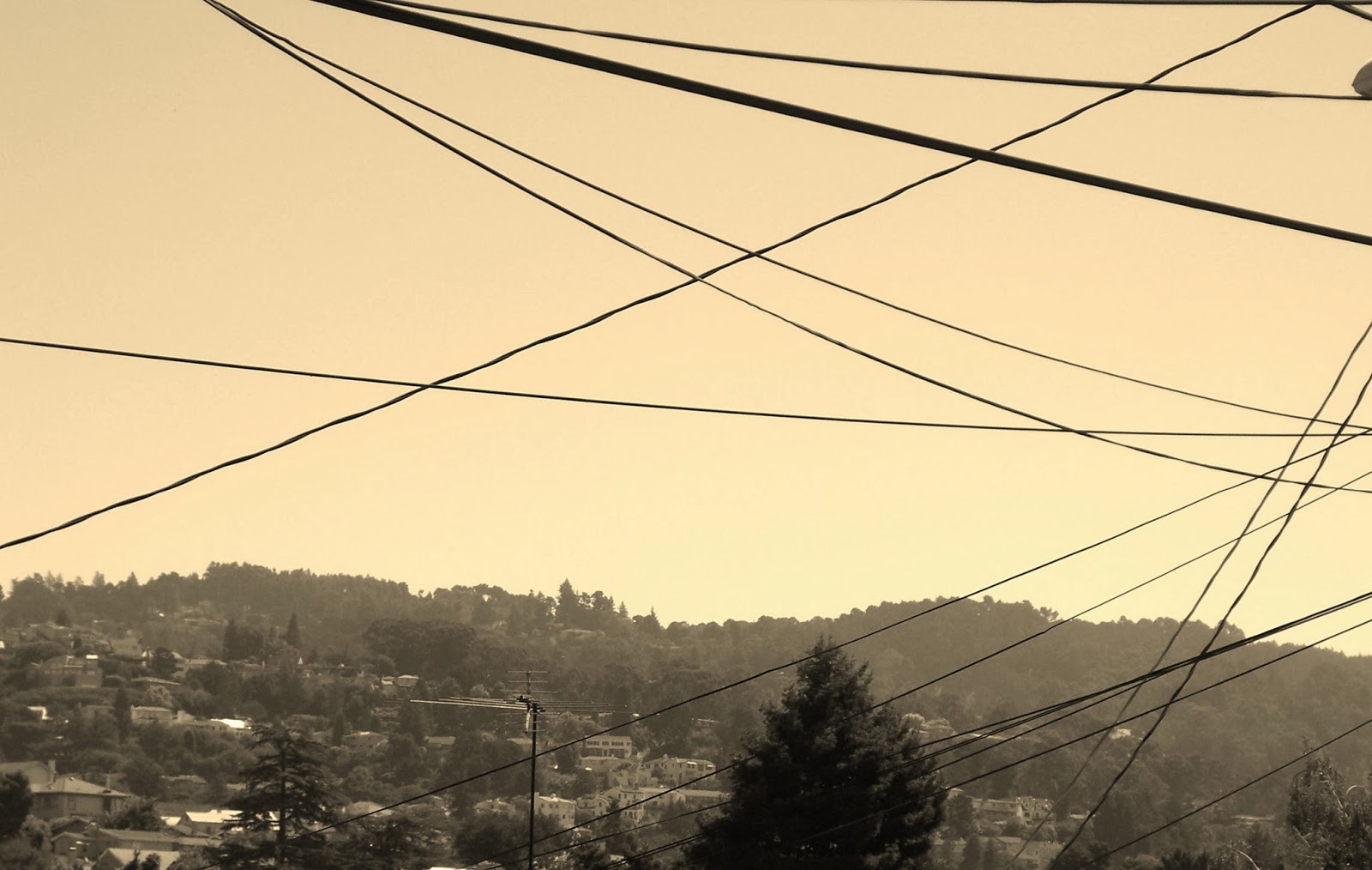 |
| Some hills, Oakland. Pic: JO'B. |
Increasingly, fear is the one thing the two sides of Oakland do have in common. As the size of the police force has fallen, there have been fewer arrests, slower response times to emergency calls, and a decreased police presence all over the city. Crime is up, and not just in the usual places, but in the hills as well. If violent crime keeps mostly to The Deep and to the western neighborhoods near the port, burglaries and robberies have become common even in the hills.
Libby Schaaf grew up in Montclair and now represents it on the City Council. She says the scary part is not necessarily the increase in crime in the hills, but the brazen nature of it — doors are kicked in, shots fired. She says the proliferation of online bulletin boards that spread word of each crime soon after it happens has made people more aware of the dangers than ever before, and this awareness has led to greater fear.
“I’ve lived in this city my whole life,” says Schaaf, “and I have never until this last year heard of people actually moving out of the city because of their fear of crime, and this year I have heard several instances of it.”
An episode from her childhood gives a sense of how sweet life can be in Oakland, and yet how enduring the city’s troubles have proven. Schaaf says she was blissfully ignorant of any problems in Oakland, until as a young girl she went to Washington, D.C., for a national Girl Scout conference. When she said she was from Oakland, someone asked if she was scared to live there. That was thirty years ago.
“I just had no idea what they meant, I grew up in the Montclair hills, I grew up on the edge of the forest, and the only thing I could think of that was negative about where I lived was the deer sometimes ate my mother’s flowers in her garden.”
She remembers a book about Oakland that her parents had around the house. She loved the title, Oakland’s Not for Burning, and wholeheartedly agreed with its sentiment, but she'd never read the book.
The title Oakland’s Not for Burning is a kind of paternalist admonishment of the city’s minority population. The book is a 40-year-old apologist memoir of white fear and a failed federal attempt to assuage the stirring masses in Oakland’s poorest neighborhoods. In the mid-1960s, in the aftermath of the Watts riots, there was concern that Oakland, a city of increasingly frustrated, destitute and displaced minorities, would be next to erupt. Something needed to be done for these people if they were to be kept calm and peaceful. Oakland’s Not for Burning was written by the man the government sent to Oakland to try to coordinate its effort to head off any violence. Those efforts were centered on a grant for the city’s port and job training to prepare minorities for the new jobs it would create. It was a valiant effort in noblesse oblige, doomed to failure by politics, union racism and bureaucracy. A few hundred jobs were created, very few at the port, which used much of the federal grant money to further automate and containerize, thus eliminating jobs.
While poor neighborhoods in Washington, D.C. and Detroit burned, Oakland never erupted. But things were heating up. The Black Panthers were born. In another decade, the drug kingpin Felix Mitchel would rise to exploit the crack epidemic. The Black Muslims appeared and for a time they thrived. The bitterness and cynicism at the heart of all three enterprises would serve to further separate white from black, flatland from hills. Even as the city’s political structure evolved from conservative to liberal, its authoritarian police force became more hated and distrusted in the minority communities. Decades later, in crime-ridden, violence-ridden parts of Oakland, the police still are seen as failures, at best.
“Particularly in the African-American community,” says Oakland Police Captain Paul Figueroa, “there’s this sense that police come in, they stop guys, they don’t find anything, and the dealers are still out there. So there’s this real sense of ineffectiveness.”
The rise in crime across neighborhoods, the shortage of police and the need to patrol the authentically violent areas of the city continue to pit the hills against the flatlands in a fight for services. Worse than that, says Figueroa, is a perception he’s encountered in the hills that it is people from the flatlands who are coming up there to rob and terrorize them.
Councilwoman Schaaf responds to their fears with neighborhood meetings about crime. They are well attended.
“I held a town hall about crime in Montclair,” says Schaaf. “I thought I had chosen a large enough venue to hold it in, a school auditorium. Three-hundred and fifty people showed up, they stood for two hours, they sat on the floor, they crowded in the doorways, literally there was no more space that people could be squeezed into, that is how upset people are about crime in this city.”
She invites to the meetings salesmen of home video surveillance systems to give presentations. You can monitor your property live, receive alerts when the system detects movement. You can more easily identify intruders. That’s one way to react.
Figueroa understands the trauma of being robbed or having your house broken into, but he knows that what’s happening in the flatlands is worse.
“The disastrous effects of violence and losing someone to a homicide are just severe, and severe for a long time. Being burglarized, although super, super upsetting, after some of the other things I’ve seen, I’m able to maybe keep it in perspective a little more.”
Like Schaaf, Figueroa grew up in Oakland thirty years ago. Only he grew up in East Oakland, near High Street, then as now a magnet for mayhem and violence.
“It hasn’t changed that much,” says Figueroa, “the epidemic of speeding cars continues, the loud music, in that area of High Street there’s a lot of narcotics.”
The shooting, the killing, the short- and long-term aftermath of each act of violence, are part of what shaped Figueroa, of what led to him becoming a cop. When Figueroa was 10, a beloved neighbor, father of his best friend, was shot and killed while walking his dog. Figueroa says the killing cast a pall over a once relatively normal, happy, active block, a pall that took years to lift. As a cop now, he sees it every day, the lasting and widespread effect of each individual killing or shooting. It becomes the muck Oaklanders must push through every day, the encoded trauma.
“There was this funk, this depression,” says Figueroa, “that just set over the neighborhood for a long time, and I’ve seen that in my career over and over again, and often times I try to describe it to people, because I’ve lived it. And what I’ve seen in my experience, is that you get homicide-homicide-homicide-violent-act, even burglaries can certainly be as traumatic for somebody, and so you get that trauma on top of trauma on top of trauma, and the funk, that we were eventually able to pull out of, it’s difficult when you stack trauma on top of trauma on top of trauma.”
- from Until You Bleed: The Caheri Gutierrez Story
an Amazon Kindle Single available for .99
Also available as an audiobook at iTunes and audible.com
Monday, January 20, 2014
"What else can a mother take?"
UPDATE: No longer a rumor.
For now it's a rumor. But I have it from a very strong source that one of the victims in Sunday's double homicide in East Oakland was the older brother of the city's first homicide of 2014. Last Wednesday, I went to the viewing for 13-year-old Lee Weathersby III, who was shot on New Year's Eve, who died on New Year's Day. It was a 4-hour wake, so people were coming and going. Young people were gathered outside the funeral home on Telegraph quietly talking. Others would walk up, say a quick hello to anyone they knew, then head inside to pay their respects to the mother, and to the spirit of the murdered 13-year-old, dapper in a white coffin, wearing a white cap and white bow tie and blue shirt. Two or three people at a time stood over him, some weeping, some praying, some just staring, slowly shaking their heads in despair. Funeral home workers came and went. Out on both corners of 36th and Telegraph, white-jacketed Oakland Unite violence prevention guys, our Interrupters, mostly young Latino and African-American men, some of whom had been in trouble in their pasts, many of whom have been shot at least once, stood a quiet, non-violent guard. There had been talk, I guess, that the 13-year-old, had been mistaken for his older brother. Someone said the kid had been shot 15 times. Someone else said 28. The community was worried that the killer might show up at the wake, looking for his rumored original target, Lee's brother. But either they were wrong, or the presence of about a dozen Oakland Unite intervention specialists deterred that bloody quest. The next day, Lee's funeral went off peacefully. Then, three days after the funeral, on Sunday afternoon, I got a text:
Read about Jimon Clark, another 13-year-old, killed in Oakland in 2010 - "13"
For now it's a rumor. But I have it from a very strong source that one of the victims in Sunday's double homicide in East Oakland was the older brother of the city's first homicide of 2014. Last Wednesday, I went to the viewing for 13-year-old Lee Weathersby III, who was shot on New Year's Eve, who died on New Year's Day. It was a 4-hour wake, so people were coming and going. Young people were gathered outside the funeral home on Telegraph quietly talking. Others would walk up, say a quick hello to anyone they knew, then head inside to pay their respects to the mother, and to the spirit of the murdered 13-year-old, dapper in a white coffin, wearing a white cap and white bow tie and blue shirt. Two or three people at a time stood over him, some weeping, some praying, some just staring, slowly shaking their heads in despair. Funeral home workers came and went. Out on both corners of 36th and Telegraph, white-jacketed Oakland Unite violence prevention guys, our Interrupters, mostly young Latino and African-American men, some of whom had been in trouble in their pasts, many of whom have been shot at least once, stood a quiet, non-violent guard. There had been talk, I guess, that the 13-year-old, had been mistaken for his older brother. Someone said the kid had been shot 15 times. Someone else said 28. The community was worried that the killer might show up at the wake, looking for his rumored original target, Lee's brother. But either they were wrong, or the presence of about a dozen Oakland Unite intervention specialists deterred that bloody quest. The next day, Lee's funeral went off peacefully. Then, three days after the funeral, on Sunday afternoon, I got a text:
Jim, the 13 year old's brother was killed today. What else can a mother take?Or a city.
Read about Jimon Clark, another 13-year-old, killed in Oakland in 2010 - "13"
Tuesday, December 31, 2013
Healers in a plague
The paragraph below comes near the end of Camus' novel The Plague. It refers to those who tried to comfort and save the citizens of Oran during the epidemic. Reading it this morning, I was reminded of all the Oakland violence prevention workers I write about here on the Almanac, but especially those who themselves were once victimized by the violence, like Marilyn Washington Harris and Caheri Gutierrez, Oaklanders who do what has to be done, who refuse to bow down, who strive to be healers, despite their own afflictions. Just replace "terror" with "violence," and "pestilences" with "guns" or "killers" -
...he knew that the tale he had to tell could not be one of a final victory. It could only be the record of what had had to be done, and what assuredly would have to be done again in the never ending fight against terror and its relentless onslaughts, despite their personal afflictions, by all who, while unable to be saints but refusing to bow down to pestilences, strive their utmost to be healers. -From The Plague by Albert Camus
...he knew that the tale he had to tell could not be one of a final victory. It could only be the record of what had had to be done, and what assuredly would have to be done again in the never ending fight against terror and its relentless onslaughts, despite their personal afflictions, by all who, while unable to be saints but refusing to bow down to pestilences, strive their utmost to be healers. -From The Plague by Albert Camus
.jpg) |
| Marilyn Washington Harris |
 |
| Caheri Gutierrez |
Monday, December 30, 2013
A sub-100 year: what history tells us
2013 is coming to an end and some in Oakland want to, if not celebrate, then find hope in the city's homicide number for the year, which will be that rarity since the early 1970s: fewer than 100. Maybe this is the beginning of a change that will be permanent. No question, it will have been a far better year for the city than 2012, when over 130 people were murdered here.
Of course, tell that to the families of the nearly 90 dead in 2013:
Oakland's Civic Trauma;
Cold Bodies, Cold Analysis, Chilling Irony;
Read About Today's Killings, Then Forget;
OPD Chief on Young Murder Witness;
Death Like a Public Bus.
No one has ever told me how or when we will know that we have genuinely shed our murderous character as a city. It's important to remember that the homicide numbers have fallen below 100 here and there (see this brief history of the homicide rate in Oakland), and that politicians have touted those numbers as progress every time, and that eventually, usually quite quickly, the numbers have surmounted 100 again, sometimes by a lot. As recently as 2010, there were 95 homicides. Then in 2011, there were 110. In 2012, 131.
And anyway, as I wrote back in June of 2011:
Of course, tell that to the families of the nearly 90 dead in 2013:
Oakland's Civic Trauma;
Cold Bodies, Cold Analysis, Chilling Irony;
Read About Today's Killings, Then Forget;
OPD Chief on Young Murder Witness;
Death Like a Public Bus.
No one has ever told me how or when we will know that we have genuinely shed our murderous character as a city. It's important to remember that the homicide numbers have fallen below 100 here and there (see this brief history of the homicide rate in Oakland), and that politicians have touted those numbers as progress every time, and that eventually, usually quite quickly, the numbers have surmounted 100 again, sometimes by a lot. As recently as 2010, there were 95 homicides. Then in 2011, there were 110. In 2012, 131.
And anyway, as I wrote back in June of 2011:
The human urge to squeeze the trigger never checks the calendar. Perhaps grasping for hope when they’re down, or out of morbid shock when they’re up, like now, we tend to pay too much attention to the daily and weekly violent crime numbers in Oakland. We assign them too much meaning.
Quan’s ObjectionCertainly politicians and the newspapers do. Precisely one year ago, then-mayoral-candidate Jean Quan reacted defensively when I suggested to her that violence should be a priority of the next mayor. “We’ve brought the murder rate down,” she said.
That was in June 2010, and so far there had been 37 homicides in the city, 6 fewer than June 2009, a modest number, and a more seemingly significant 24 fewer than June 2008.
The Calendar and the KillingThe calendar year 2010 ended with 13 fewer homicides than the year before -- 100 vs. 87.
But what does it indicate, that in the twelve months since Quan’s objection to my suggestion -- mid-June 2010 to mid-June 2011 -- there have been 100-plus homicides, at least six more than between mid-June 2009 and mid-June 2010?
What does it mean?
Nevertheless, in daily news reports of homicides, habitually reporters insert the current year’s number of killings-so-far alongside the total from “this time last year.” These numbers shouldn’t bring readers much hope, as in 2010, or, in the case of June 2011, when we have already suffered 51 homicides, deeper despair.
- From Trauma Cache, Part 1: The Calendar and The KillingAgain, I hope the 40 fewer homicides from last year to this really is the result of police re-organization or Ceasefire or whatever else the politicians will tell us has turned the tide. But it will take time, it will take years, maybe even generations, to know if we have gained some peace. There were 3 homicides as the calender turned, 2 in East Oakland, 1 in West Oakland.
Subscribe to:
Posts (Atom)